
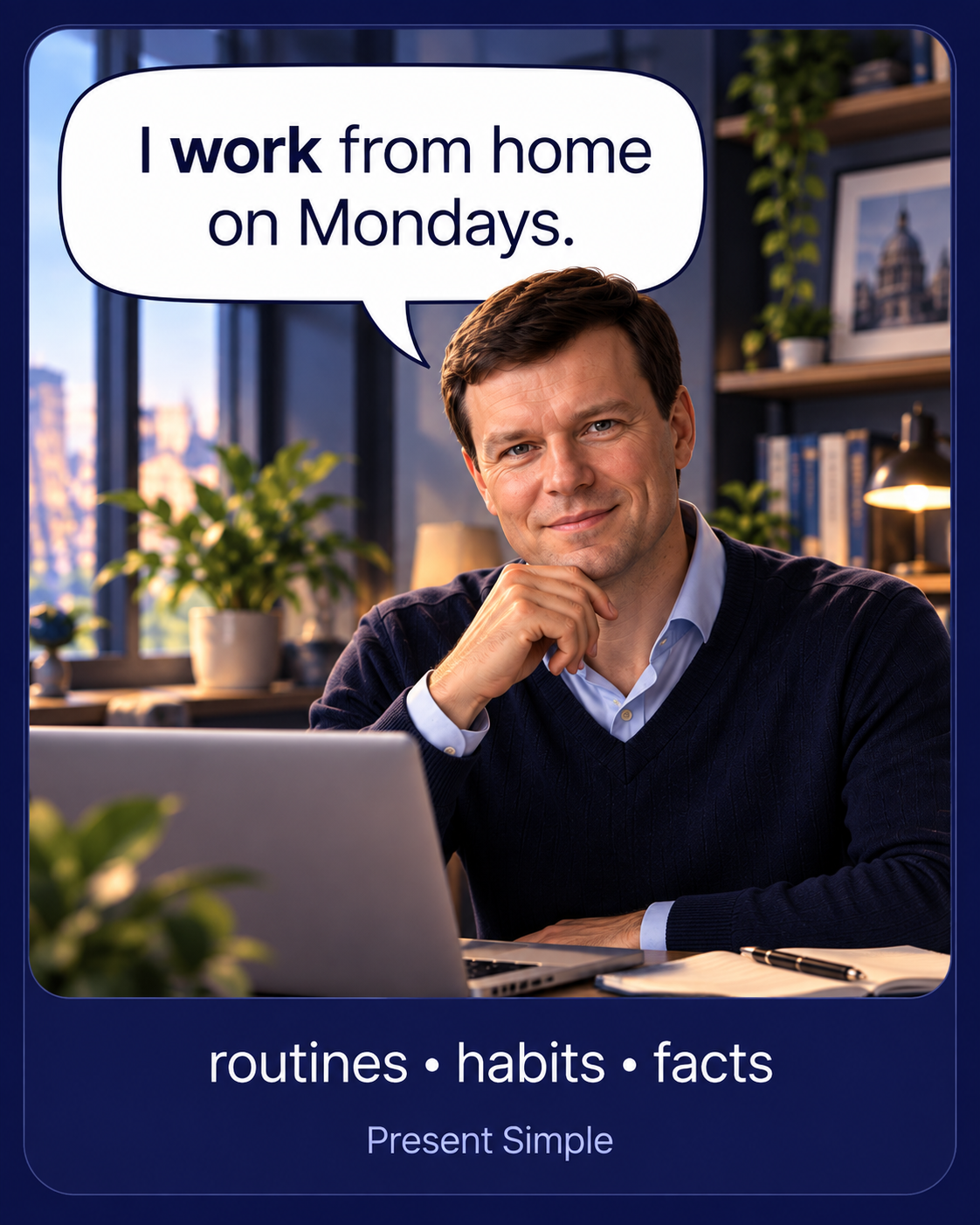
PRESENT SIMPLE
I work from home on Mondays.
Use it for routines, habits, facts, and things that are generally true.
Grammar becomes easier when two similar forms are compared inside the same situation.
The meeting starts in five minutes = schedule. The meeting is starting in five minutes = arranged/imminent event. The meeting will start in five minutes = neutral future statement.


I had my hair cut. Focus on arranging a service. I got my phone fixed. Often sounds slightly more informal and action-focused.
Can is normal for ability and everyday permission. May is more formal for permission and possibility.
Real possibility, hypothetical present/future, and unreal past — taught through one connected story instead of three unrelated rules.
A useful explanation starts with the exact contrast you are trying to understand.
Tell me your level, goal, and preferred lesson format.
Your email is used only to reply to your message. Privacy details.